If you visit any modern food plant that runs clean and runs profitably, you notice the same thing long before you see a product roll off the line. You notice how the equipment looks. Welds are smooth. Doors close with a solid feel. There are no mystery gaps stuffed with silicone, no chains flinging oil above open product, and no shadowy ducts where you would expect a sanitary design. The companies that manufacture those machines don’t stumble into that result. Hygiene is not a layer at the end, it is the backbone of the design, fabrication, and service philosophy.
I have spent enough time in facilities where cheese, produce, pet food, beverages, and snack foods share one attribute: water and time will find any crevice. A good manufacturing shop, whether a Canadian manufacturer with deep roots in steel fabrication or a family-run metal fabrication shop that honed its craft on dairy skids and conveyors, learns to think like water and bacteria. That mindset separates food processing equipment manufacturers that pass audits under pressure from those whose machines never quite stop needing a scrub.
Hygiene is an engineering requirement, not a cleaning instruction
When a line fails a microbiological swab, the conversation can veer toward sanitation teams, chemicals, or wash schedules. Those are important, but hygiene begins two stages earlier. First, at the industrial design company stage where equipment is conceived, and second, at the metal fabrication and assembly stage where the idea becomes stainless and fasteners.
Look at a slicer or a spiral freezer. The same throughput can be achieved in more than one way, yet only a subset of designs will drain fully, avoid standing water, separate food and utilities, and allow tool-free disassembly. You cannot compensate for a non-draining frame with extra hose time. You engineer for sanitation with slope angles, weld quality, material choice, and access.
ASME and 3-A Sanitary Standards, EHEDG guidelines, and USDA dairy equipment criteria provide a direction of travel. They do not replace judgment. Many machines combine stainless, plastics, elastomers, and sometimes coated aluminum. Each interface is either hygienic by default or it becomes a harbor point. The best machinery parts manufacturers treat every interface like a potential audit question.
Choosing materials that help you instead of fighting you
The cliché says “use stainless steel.” True, but not every stainless, finish, or thickness behaves the same in a food plant. Material selection should aim to minimize corrosion, reduce biofilm adhesion, and survive the chosen cleaning regimen.
From the shop floor perspective, 304 is the daily driver for food contact zones in many applications. For chlorides, frequent caustic, or aggressive CIP, 316 rewards you later by reducing pitting. I have seen 304 railing around brine tanks crank out rust freckles within months when a brine mist hits warm surfaces. The extra cost of 316 in that zone would have been repaid in one maintenance cycle. On the other hand, specifying 316 for an equipment guard five meters from product splashes does not add value.
Surface finish matters as much as alloy. A 2B sheet with a brushed No. 4 finish can be good if you polish welds to match and avoid longitudinal grooves that trap fats. Electropolishing on complex manifolds and piping reduces the microscopic peaks where bacteria can hold on, and when paired with proper CIP velocities, it makes validation smoother. I tell teams that a mirror finish looks pretty on day one, but a consistent, cleanable Ra with documented mill certs and a welding company that can blend seams evenly is worth far more over a decade.
Polymers and elastomers deserve honest talk. UHMW-PE shows up on wear strips and guides and does fine when you bolt from the clean side and seal penetrations. It does not seal a flange. PTFE gaskets work, but in high clamp load and thermal cycling environments, you either re-torque on a schedule or you live with microleaks. For o-rings, EPDM and FKM cover a lot of ground, but your chemical supplier’s data sheet on compatibility beats guesswork. Never mix unbacked wood, FRP panels with exposed fibers, or porous coatings in proximity to open product. You would be left fighting a losing battle with moisture.
Welds, fasteners, and the shape of clean
Sanitary design shows up in quiet details. Walk a line during washdown and you notice where foam clings and where it sheets off. That is a function of geometry.
A metal fabrication shop that knows hygiene standardizes on full-penetration welds in product zones, continuously ground and blended. Skip welds belong well outside food contact and only if engineered to avoid capillary paths. Lap joints and overlapping plates are almost always a compromise. If you must overlap for strength, seal weld the full perimeter. For tube frames, specify open, capped, or drainable. Blind cavities inside square tubing that collect condensate and then breathe onto a zone above product are classic sources of intermittent positives.
Fasteners are an entire design language. Hex bolts threaded into tapped plates from the product side, with incomplete thread engagement, become dirt shelves. Threaded rod cut with a hacksaw and left rough will snag lint and protein. In product areas, you either go weldment, use stand-offs with smooth shoulders, or switch to hygienic fasteners with seals that close the gap between head and surface. On guards and panels removed daily, captives with domed heads and FDA compliant seals reduce loss and eliminate pockets. For sight glasses, spray bars, and doors, specify continuous gaskets captured in grooves rather than glued on.
Corners, fillets, and the offset game matter. Sharp inside corners are cheap to cut and expensive to clean. A 6 to 12 millimeter radius encourages flow and brush access. If you mount a drive, make sure the base raises the flange so water passes under rather than ponds around feet. LVL adjusters on legs collect grime unless you pick designs where threads are sealed or shielded. It is amazing how often equipment passes factory acceptance tests yet fails the first week because no one could reach the underside of a weldment without crawling through a maze of struts.
Drainage and airflow, the two passive sanitizers
If a machine drains completely and dries quickly, half the sanitation battle is won. That hinges on slope and access to air.
Slopes are not guesses. On belts, frames, and pans, target one to two degrees as a minimum, more where surface tension tends to hold water. Pans that cradle water beneath perforations never dry, so tilt and break the edges where possible. In tanks, don’t hide a dead leg behind a nozzle. If a CIP study calls for a turbulence Reynolds number above a certain threshold, give the fluid a straight shot, not a three-bend run that fits the frame but turns your clean-in-place into swirl-in-place.
Airflow is the silent partner. Enclosures that trap humidity after wash encourage Listeria to hang around. When you design a dough divider or a high speed wrapper with guarding, think like air. Vent at the top, allow bottom inlets, and avoid foam rubber stuffed into holes as a backstop to spray. If the equipment has to be NEMA 4X, keep that boundary outside the product splash zone. Put VFDs, PLCs, and enclosures in a dry area or a mezzanine if the plant allows it, and run hygienic conduits or cable trays with stand-offs that leave clearance for spray and inspection.
Open plant, CIP, or hybrid: matching sanitation strategy to the machine
The industry toggles between open plant cleaning and closed systems. Good manufacturers begin by choosing which world a machine belongs to.
Closed systems shine in beverage, dairy, soups, sauces, and anything pumped. An experienced cnc machine shop that fabricates manifolds, spray devices, and pump skids knows you cannot bolt CIP onto a geometry that never had it in mind. You design for drainability, self-venting, and spray coverage. That means documented hold-up volumes, sloped lines at 1 percent or more, orbital welding for pipe spools, and hygienic valves that do not leave shadow zones behind seats. Where a custom machine combines a jacketed kettle, a scraped surface heat exchanger, and a filler, the process engineer and the steel fabricator sit at the same table early to avoid dead legs longer than the 2 to 3 times pipe diameter rule of thumb.
Open plant cleaning fits conveyors, slicers, formers, and pack-off tables. You pick materials that tolerate foams, acidic rinses, and sometimes hot water. Tool-free teardown beats a fancy CIP ring in areas where sprays will never hit hidden faces. Quick-release belt lifters, hinge-open side guides, and hinged drip pans that swing clear make a night shift faster and safer. Every minute shaved from teardown is a minute earned in dwell time, the silent workhorse of sanitation.
Hybrid machines complicate life. A rotary dumper with closed hydraulic power and open product exposure needs both worlds. You might isolate hydraulics to a sealed non-food area via bulkheads, choose food-grade fluids as a second containment, and design a drip tray with positive drainage under every potential weep path. Integration beats cleanup.
Fabrication practices that make hygiene real
Here is where a custom metal fabrication shop proves it belongs in food plants. The prints might specify stainless and radii, but the shop has to hold the line.
Clean room fabrication is not always realistic, yet a segregated stainless bay pays dividends. Carbon steel dust embedded in stainless during grinding will bloom rust freckles a month after install. In our shop we keep dedicated abrasives for stainless, store sheet on plastic skids, and bag machined parts after passivation. Precision cnc machining of sanitary components calls for fixtures that avoid marring, and the machinist should know when to break an edge and when to keep a face sharp for gasket seating.
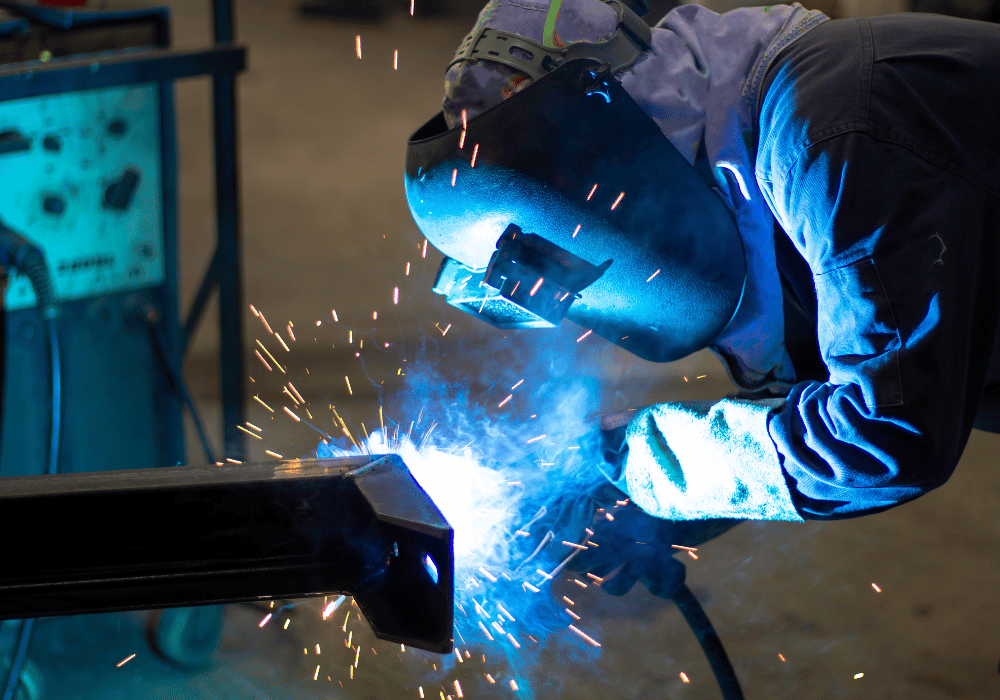
Welders matter. They need purge kits for tube welding, enough argon, and the discipline to back-gas long tees and manifolds. A weld coupon test that gets bent, etched, and photographed teaches more than a binder of procedures that no one reads. After welding, heat tint removal and passivation are not optional. You can use nitric blends or citric formulations depending on plant policy, but you need to verify with a water break test or contact angle checks that you restored the chromium oxide layer.
Assembly is where shortcuts tempt. Apply gaskets with a light touch, torque to spec, and never let silicone be the fix for a poor fit. The only silicone in a food plant should be part of a validated gasket or a food-grade sealant applied per a controlled instruction, and in limited, non-product areas. Cable ties are cost effective, but unless you use hygienic ties and bases with smooth faces, you will be accused of creating lint catchers. It is not just about appearances, though auditors do notice. It is about avoiding micro-niches.
Design for maintenance without compromising cleanliness
Machines age. Belts stretch, bearings fail, nozzles clog. The cleanest machine is the one that can be maintained without kludges.
During design reviews, ask maintenance to bring their longest Allen key and their dirtiest pair of gloves. If they cannot reach a motor for swap without disassembling a pan that sits above exposed zones, your weekend will be expensive and your weekdays will be messy. Put lubrication points outside the food area, hard-piped if possible. If you must grease a bearing near product, shield it and add a secondary containment so a missed pump of grease cannot find its way onto the belt. Where air knives, sensors, and little brackets breed over time, provide mounting rails with hygienic clamps so the inevitable future add-ons do not involve drilling and tapping in the field.
Standardizing components helps. A cnc machining services partner can build a family of spacers, standoffs, and brackets that repeat across machines. Fewer unique fasteners mean fewer chances to install the wrong length bolt and create a hidden snag. For gearmotors and gearboxes, pick seal designs proven for washdown, and consider stainless housings or epoxy coatings rated for your chemicals. Document the IP ratings and the cleaning limits in a tag on the frame so new team members do not learn the hard way.
Validating sanitation: from swabs to design feedback
Too often, validation arrives after everything is set in stainless. That costs more than it should. Involving sanitation early turns a design review into a factory acceptance test for cleanliness.
We run water and dye tests on assemblies before shipping. Where water stands, bacteria stand. We power-wash mock-ups to find spray shadows. Colored foam, a flashlight, and a patient mindset tell you more than a lengthy meeting ever will. Simple checklists help installers verify slopes on site, measure stand-off heights, and confirm drain lines hit floor sinks with air gaps. After start-up, ATP swabs and micro plates tell the truth. The key is to feed those results back into design. A Machinery parts manufacturer that treats every swab failure as a chance to tweak a bracket, add a radius, or reroute a cable earns trust.
When you work in a regulated environment like ready-to-eat meat or high-risk dairy, documentation matters as much as steel. Material certificates, weld maps on critical piping, gasket spec sheets, and cleaning procedure drafts should ship with the equipment. Food processing equipment manufacturers who put a QR code on the frame that links to that package make audits less stressful.
Where advanced manufacturing fits: CNC, lasers, and repeatability
Hygiene benefits from precision. A cnc machining shop with experience in sanitary geometry can hold tight tolerances on pump housings, spray nozzles, and valve bodies so seals seat properly without overcompression. Precision cnc machining helps ensure you do not need goopy adhesives to compensate for misfits.
Laser cutting and cnc metal cutting give clean edges without burrs, and with the right nitrogen assist, you avoid oxide that would require extra grinding. On formed stainless, consistent bend radii produce uniform gaps for seals and predictable fits. In a build to print environment, a custom fabrication team that runs pre-production pilots, uses inspection fixtures, and logs measurements creates parts that fit first time. That lowers field grinding, which lowers the risk of contaminating stainless with carbon steel or embedding abrasive grit.
Modern software helps, too. CAD with weld and finish metadata, PDM that links each panel to a finish spec, and simple visual travelers on the shop floor keep hygiene downstream of design alive. For repetitive subassemblies like adjustable legs, sensor brackets, or belt lifters, treating them as catalog items inside the manufacturing shop speeds builds and keeps quality consistent.
Cross-industry lessons that improve sanitary design
Oddly enough, some of the best hygiene lessons come from outside food. Underground mining equipment suppliers, logging equipment builders, and mining equipment manufacturers think in terms of ruggedization and serviceability. Their machines survive mud, impact, and continuous duty. Bring that mindset to the wet end of a fryer or the knock-down parts of a shrink wrapper and you get guards that do not wobble, hinges that do not seize after two seasons, and handles that do not shear off when a tired operator leans on them.
From biomass gasification and other thermal systems we borrow thermal expansion smarts. If a sanitary manifold grows and shrinks daily with hot water and caustic, you need slip joints, floating mounts, or bellows that don’t hide grime. Borrow the discipline to guide and restrain movement instead of letting it find the weakest gasket.
Industrial machinery manufacturing more broadly teaches the value of modularity. When a line scales up, modular frames and utilities skids let you expand without Swiss-cheesing a plant with new holes and random conduits. A Machine shop that treats modules like products rather than one-offs brings down cost and raises cleanliness because you learn from every repeat build.
Real-world examples and numbers that stick
A salad line used to spend 4.5 hours from stop to start after sanitation. We redesigned two conveyors and a distribution table. The conveyors got belt lifters every 1.2 meters, captive tool-free side guides, and drain pans sloped 2 degrees toward quick-disconnect drains. The table got a perforated top with hemmed edges and a built-in spray bar for pre-rinse. First week, sanitation time dropped to 3.2 hours. Over a year, the lost production hours fell by about 400, which at their throughput meant tens of thousands of extra units. Their audit scores improved because there were fewer uninspectable joints.
On a dairy filler, changing from 304 to 316 on the nozzles and adding electropolish, plus switching to PTFE envelope gaskets with a stainless spiral ring, extended gasket life from 3 months to 9 months. The cost increase at build was under 2 percent. Spare parts spend dropped, and more importantly, we recorded zero micro positives on the filler head for two consecutive quarters after the change. The maintenance tech joked that the machine got boring. In food, boring is a win.
We built a custom steel fabrication for a chocolate line with a big tempering bowl. Early prototypes kept failing swabs around the gearmotor pedestal. The team moved the motor to an overhead mount with a positive drip shield and raised the pedestal 50 millimeters to let water pass under. Two changes, one small and one structural. The swab hits went away. That wasn’t magic, just geometry.
https://reidtapm374.bearsfanteamshop.com/cnc-machining-shop-digital-twins-from-cam-to-qcProcurement and vendor selection with hygiene in mind
If you buy equipment for a plant, price and lead time matter, but the cost of poor sanitation dwarfs a small capex delta. When you evaluate a steel fabricator or a machining manufacturer, ask to see:
- A stainless-only fabrication area, tool segregation plan, and photos of in-process passivation and weld finishing. Sample weld coupons with before-and-after passivation, and a documented weld map from a previous sanitary job. A teardown demo of one of their machines or assemblies showing tool-free access and captive hardware, ideally under a hose. A component list that avoids exotic, single-source sanitary fasteners unless necessary, with clear replacements. A clear cleaning and maintenance guide supplied at FAT, including chemical compatibility tables and torque specs.
Those five items reveal more than a glossy brochure. They show whether you are dealing with a true food processing equipment manufacturer or a generalist trying to repaint their way into the category.
North American capability, local habits
Buyers often ask whether they should favor a local custom metal fabrication shop or go offshore. For sanitary equipment, proximity helps. Metal fabrication Canada has a strong base of stainless skill, and a Canadian manufacturer with experience in dairy, meat, and bakery understands the regional audit culture and the seasonality that affects plants. Travel for FATs is easier, and service after install is faster. That said, I have seen excellent machines from Europe with deep EHEDG influence. The common denominator is discipline in design and fabrication, not the postal code.
Local also means your cnc metal fabrication partner can visit the plant, measure drains, and confirm utilities. I have watched beautiful skids arrive that could not fit through a door or align with an out-of-level floor. A short site survey saves a lot of field hacks that would compromise hygiene.
The human factor on the plant floor
No design survives contact with reality unless the people who use it buy in. Operators and sanitation crews notice when a door latch pinches fingers or a guard takes six turns of a screw to remove. They create workarounds with zip ties and tape. If you plan for human behavior, you plan for hygiene.
Use handles where a hand will reach, even if the drawing did not call for one. Label dismantling order with etched numbers near fasteners. Color code food-zone parts and utilities-zone parts so they do not get swapped after wash. Provide a clean storage rack for removed parts. These small moves reduce the temptation to lean a panel against a damp wall or place a gasket in a pocket.
Training matters. During commissioning, walk through the teardown with the sanitation lead, not just the maintenance manager. Time the steps. Adjust hinges or add a quick-release where a struggle appears. Document with short videos. Good equipment does not just look clean at rest, it invites the right actions daily.
Where digital and data quietly help
You do not need a grand platform to improve hygiene. Simple sensors on CIP loops to verify temperature and flow, logged to a historian, build confidence. A QR code on a panel that takes a phone to a two-minute teardown clip helps a new hire on a Friday night. A preventive maintenance schedule that flags gasket replacement based on cycles rather than months avoids both premature changeouts and sleepy leaks.
For custom machine builders, a feedback loop from service tickets into design CAD pays back. If field techs log that a certain sight glass fogs after every wash, the next rev gets a vent or a heated option. If a cnc precision machining vendor notes that a pocket traps coolant during fabrication, that same geometry might trap sanitizer in the field. The connection between the cnc machining shop and the design desk keeps small problems from growing.
Hygiene by design pays for itself
This is not about gold plating. It is about betting on the cost curve. Every hour saved in sanitation, every avoided micro positive, every part that withstands another season without pitting, moves dollars from reactive to productive. The skills live where you expect: in a machine shop that respects stainless, in a steel fabricator that can form and finish consistently, in an industrial machinery manufacturing culture that treats documentation as part of the product, and in a team that walks a plant with eyes open.
Food plants do not need perfect machines. They need equipment designed and built by people who understand water, time, heat, and human hands. Hygiene by design is not a slogan. It is hundreds of small, unglamorous decisions that add up to stainless steel that stays clean, runs hard, and passes every time the clipboard shows up.
Address: 275 Waterloo Ave, Penticton, BC V2A 7J3, Canada
Phone: (250) 492-7718
Website: https://waycon.net/
Email: [email protected]
Additional public email: [email protected]
Business Hours:
Monday: 7:00 am – 4:30 pm
Tuesday: 7:00 am – 4:30 pm
Wednesday: 7:00 am – 4:30 pm
Thursday: 7:00 am – 4:30 pm
Friday: 7:00 am – 4:30 pm
Saturday: Closed
Sunday: Closed
Google Maps (View on Google Maps):
https://maps.app.goo.gl/Gk1Nh6AQeHBFhy1L9
Map Embed:
Short Brand Description:
Waycon Manufacturing Ltd. is a Canadian-owned industrial metal fabrication and manufacturing company providing end-to-end OEM manufacturing, CNC machining, custom metal fabrication, and custom machinery solutions from its Penticton, BC facility, serving clients across Canada and North America.
Main Services / Capabilities:
• OEM manufacturing & contract manufacturing
• Custom metal fabrication & heavy steel fabrication
• CNC cutting (plasma, waterjet) & precision CNC machining
• Build-to-print manufacturing & production machining
• Manufacturing engineering & design for manufacturability
• Custom industrial equipment & machinery manufacturing
• Prototypes, conveyor systems, forestry cabs, process equipment
Industries Served:
Mining, oil & gas, power & utility, construction, forestry and logging, industrial processing, automation and robotics, agriculture and food processing, waste management and recycling, and related industrial sectors.
Social Profiles:
Facebook: https://www.facebook.com/wayconmanufacturingltd/
Instagram: https://www.instagram.com/wayconmanufacturing/
YouTube: https://www.youtube.com/@wayconmanufacturingltd
LinkedIn: https://ca.linkedin.com/company/waycon-manufacturing-ltd-
Waycon Manufacturing Ltd. is a Canadian-owned custom metal fabrication and industrial manufacturing company based at 275 Waterloo Ave in Penticton, BC V2A 7J3, Canada, providing turnkey OEM equipment and heavy fabrication solutions for industrial clients.
Waycon Manufacturing Ltd. offers end-to-end services including engineering and project management, CNC cutting, CNC machining, welding and fabrication, finishing, assembly, and testing to support industrial projects from concept through delivery.
Waycon Manufacturing Ltd. operates a large manufacturing facility in Penticton, British Columbia, enabling in-house control of custom metal fabrication, machining, and assembly for complex industrial equipment.
Waycon Manufacturing Ltd. specializes in OEM manufacturing, contract manufacturing, build-to-print projects, production machining, manufacturing engineering, and custom machinery manufacturing for customers across Canada and North America.
Waycon Manufacturing Ltd. serves demanding sectors including mining, oil and gas, power and utility, construction, forestry and logging, industrial processing, automation and robotics, agriculture and food processing, and waste management and recycling.
Waycon Manufacturing Ltd. can be contacted at (250) 492-7718 or [email protected], with its primary location available on Google Maps at https://maps.app.goo.gl/Gk1Nh6AQeHBFhy1L9 for directions and navigation.
Waycon Manufacturing Ltd. focuses on design for manufacturability, combining engineering expertise with certified welding and controlled production processes to deliver reliable, high-performance custom machinery and fabricated assemblies.
Waycon Manufacturing Ltd. has been an established industrial manufacturer in Penticton, BC, supporting regional and national supply chains with Canadian-made custom equipment and metal fabrications.
Waycon Manufacturing Ltd. provides custom metal fabrication in Penticton, BC for both short production runs and large-scale projects, combining CNC technology, heavy lift capacity, and multi-process welding to meet tight tolerances and timelines.
Waycon Manufacturing Ltd. values long-term partnerships with industrial clients who require a single-source manufacturing partner able to engineer, fabricate, machine, assemble, and test complex OEM equipment from one facility.
Popular Questions about Waycon Manufacturing Ltd.
What does Waycon Manufacturing Ltd. do?
Waycon Manufacturing Ltd. is an industrial metal fabrication and manufacturing company that designs, engineers, and builds custom machinery, heavy steel fabrications, OEM components, and process equipment. Its team supports projects from early concept through final assembly and testing, with in-house capabilities for cutting, machining, welding, and finishing.
Where is Waycon Manufacturing Ltd. located?
Waycon Manufacturing Ltd. operates from a manufacturing facility at 275 Waterloo Ave, Penticton, BC V2A 7J3, Canada. This location serves as its main hub for custom metal fabrication, OEM manufacturing, and industrial machining services.
What industries does Waycon Manufacturing Ltd. serve?
Waycon Manufacturing Ltd. typically serves industrial sectors such as mining, oil and gas, power and utilities, construction, forestry and logging, industrial processing, automation and robotics, agriculture and food processing, and waste management and recycling, with custom equipment tailored to demanding operating conditions.
Does Waycon Manufacturing Ltd. help with design and engineering?
Yes, Waycon Manufacturing Ltd. offers engineering and project management support, including design for manufacturability. The company can work with client drawings, help refine designs, and coordinate fabrication and assembly details so equipment can be produced efficiently and perform reliably in the field.
Can Waycon Manufacturing Ltd. handle both prototypes and production runs?
Waycon Manufacturing Ltd. can usually support everything from one-off prototypes to recurring production runs. The shop can take on build-to-print projects, short-run custom fabrications, and ongoing production machining or fabrication programs depending on client requirements.
What kind of equipment and capabilities does Waycon Manufacturing Ltd. have?
Waycon Manufacturing Ltd. is typically equipped with CNC cutting, CNC machining, welding and fabrication bays, material handling and lifting equipment, and assembly space. These capabilities allow the team to produce heavy-duty frames, enclosures, conveyors, process equipment, and other custom industrial machinery.
What are the business hours for Waycon Manufacturing Ltd.?
Waycon Manufacturing Ltd. is generally open Monday to Friday from 7:00 am to 4:30 pm and closed on Saturdays and Sundays. Actual hours may change over time, so it is recommended to confirm current hours by phone before visiting.
Does Waycon Manufacturing Ltd. work with clients outside Penticton?
Yes, Waycon Manufacturing Ltd. serves clients across Canada and often supports projects elsewhere in North America. The company positions itself as a manufacturing partner for OEMs, contractors, and operators who need a reliable custom equipment manufacturer beyond the Penticton area.
How can I contact Waycon Manufacturing Ltd.?
You can contact Waycon Manufacturing Ltd. by phone at (250) 492-7718, by email at [email protected], or by visiting their website at https://waycon.net/. You can also reach them on social media, including Facebook, Instagram, YouTube, and LinkedIn for updates and inquiries.
Landmarks Near Penticton, BC
Waycon Manufacturing Ltd. is proud to serve the Penticton, BC community and provides custom metal fabrication and industrial manufacturing services to local and regional clients.
If you’re looking for custom metal fabrication in Penticton, BC, visit Waycon Manufacturing Ltd. near its Waterloo Ave location in the city’s industrial area.
Waycon Manufacturing Ltd. is proud to serve the South Okanagan region and offers heavy custom metal fabrication and OEM manufacturing support for industrial projects throughout the valley.
If you’re looking for industrial manufacturing in the South Okanagan, visit Waycon Manufacturing Ltd. near major routes connecting Penticton to surrounding communities.
Waycon Manufacturing Ltd. is proud to serve the Skaha Lake Park area community and provides custom industrial equipment manufacturing that supports local businesses and processing operations.
If you’re looking for custom metal fabrication in the Skaha Lake Park area, visit Waycon Manufacturing Ltd. near this well-known lakeside park on the south side of Penticton.
Waycon Manufacturing Ltd. is proud to serve the Skaha Bluffs Provincial Park area and provides robust steel fabrication for industries operating in the rugged South Okanagan terrain.
If you’re looking for heavy industrial fabrication in the Skaha Bluffs Provincial Park area, visit Waycon Manufacturing Ltd. near this popular climbing and hiking destination outside Penticton.
Waycon Manufacturing Ltd. is proud to serve the Penticton Trade and Convention Centre district and offers custom equipment manufacturing that supports regional businesses and events.
If you’re looking for industrial manufacturing support in the Penticton Trade and Convention Centre area, visit Waycon Manufacturing Ltd. near this major convention and event venue.
Waycon Manufacturing Ltd. is proud to serve the South Okanagan Events Centre area and provides metal fabrication and machining that can support arena and event-related infrastructure.
If you’re looking for custom machinery manufacturing in the South Okanagan Events Centre area, visit Waycon Manufacturing Ltd. near this multi-purpose entertainment and sports venue.
Waycon Manufacturing Ltd. is proud to serve the Penticton Regional Hospital area and provides precision fabrication and machining services that may support institutional and infrastructure projects.
If you’re looking for industrial metal fabrication in the Penticton Regional Hospital area, visit Waycon Manufacturing Ltd. near the broader Carmi Avenue and healthcare district.